
How to stop hanging pieces in chess
A hanging piece is a piece your opponent can take for free. At lower ratings, hanging pieces decide a huge share of games. The good news: it's a habit problem, and habits can be trained.
What counts as hanging
A piece hangs when:
- It's attacked and nothing defends it.
- It's attacked by a cheaper piece, even if it's defended. A knight attacked by a pawn is in trouble either way.
- It's attacked more times than it's defended.
The 5 ways pieces become loose
- The defender moves away. Your queen was guarding the bishop, you move the queen to attack, and the bishop is suddenly free.
- A trade removes the defender. After pieces come off, check what each one was protecting.
- A pawn push opens a line. Moving a pawn can expose a piece behind it to a bishop or rook.
- One piece defends two things. If it's needed in two places, your opponent can win one.
- Time pressure. When the clock gets low, the check is the first thing to go. That's when pieces drop.
The check before every move: Checks, Captures, Threats
Before you move, look at the board from your opponent's side and ask:
- Checks: can they check my king after this move?
- Captures: what can they capture, and is it defended?
- Threats: what are they attacking, and what did my move leave behind?
It takes about 10 seconds. In blitz, do a fast version: "What does their last move attack, and what does my move leave undefended?"
A real example
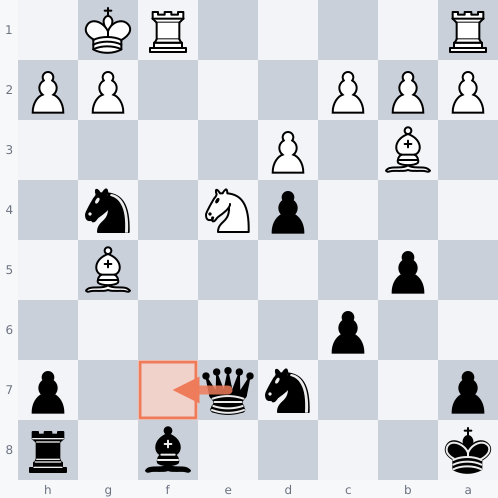
In this game, Black played Qf7??, and the queen could simply be taken. A three-second capture check would have caught it.
Find your own hanging pieces
Your own games show you exactly where it happens. Rokka reviews your recent Chess.com games with Stockfish and marks the moves that dropped material, with the better move shown on the board. Each analyzed game in your Games list shows a one-line verdict, like 'Move 18 hung your knight', so you can spot the pattern at a glance. If hanging pieces keep showing up, Your path builds a unit around them.
Practice it
- Puzzles from your own games on the Train tab put you back in the moment you went wrong.
- Play it replays a loss from just before the mistake, so you can find the safe move.
- Coaching hints in learning modes flag a move that drops material and let you try again.
Common questions
How long until it sticks?
It varies, but running the check on every move is what makes it automatic. Track it in your own games rather than guessing.
Should I play slower to stop blundering?
Yes, while you build the habit. A longer time control gives you room to run the check every move, and it carries over to blitz once it's automatic.
Are puzzles enough?
Puzzles train you to see captures. The check before every move trains you to look. You need both.
What's the most common hanging piece?
Any piece can hang, but pieces in the middle of the board are exposed to more attackers, so check them first.